WHAT WAS YOUR FAVOURITE TEACHER’S NAME?
WHAT WAS YOUR FAVOURITE TEACHER’S NAME?
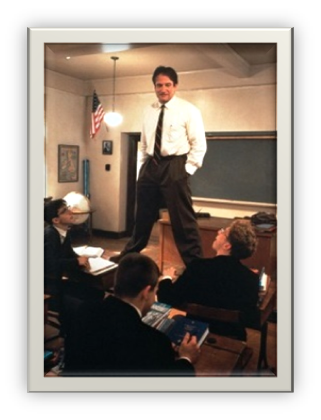
Everyone can name that one teacher that they absolutely loved.
Whether it was the passionate English teacher who stood on the desk and shouted Carpe Diem…
Or the crazy science teacher who threw potassium in a large beaker that caused a water explosion to hit the roof of the classroom…
Or the tender teacher who sat patiently with you while you had a very difficult day.Everyone has at least one special teacher that made an impact on their life.
So what makes a teacher great?
Study after study shows the single most important factor determining the quality of the education a child receives is the quality of the teacher. I have always believed that a teacher can make or break a subject for a learner.
Then again, if I was to ask you who your absolute worst teacher was, I bet you could name them too.
I bet it was that teacher that exasperated you, or the one who looked down her nose and never approved no matter what you did, or perhaps the one who threw a test on your desk and told you you didn’t actually deserve that decent result because you didn’t work as hard as she wanted you to in class.
What if there was a way to align teachers and students…
to create a common language between them that creates an environment conducive to real learning?
What if I told you we have THAT EXACT TOOL.
A tool that assesses students and teachers alike, and creates an optimal atmosphere for real learning.
POWERED BY THE GC INDEXUsing The Young People Index®, a revolutionary online assessment, we are transforming young people’s lives and enabling educators to identify and nurture the key talents of young people – the leaders and workforce of the future. We use the results from the assessments to empower young people by highlighting their natural preferences and inclinations in terms of how they contribute to a team, organisation, project, or role, consequently boosting confidence and self-awareness.
The equivalent adult tool, The GC Index®, considerably improves the performance and engagement of teachers of young people in schools, colleges, sports teams and youth organisations, by helping enhance their knowledge of the individuals and aid in understanding the contributions each young person makes, or has the potential to make.
Taking it one step further…
What if we can align teaching and learning styles to provide an even more meaningful and impactful education.
Education could become remarkable.
This knowledge and understanding can be used in many ways, some of which are:
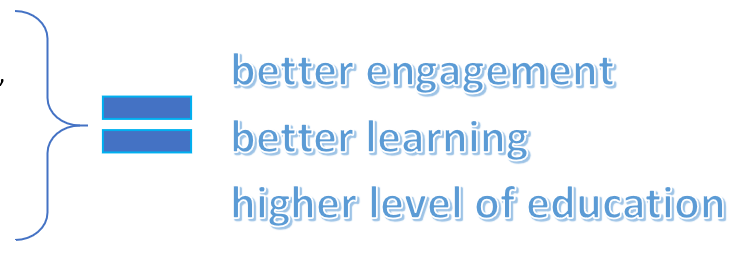
- to develop questioning skills
- adapt teaching and communication methods,
- analyse group dynamics,
- create more impactful groupings,
- boost confidence in young people,
- increase rapport.
Knowing who you are and how you can make an impact and contribution in your life, is one of the most important things you need to know. We have the tools to help you, teachers and learners, discover more about yourself and to reach your future potential. Now, more than ever before, education needs to adequately prepare our youth for the future. The future that lies ahead is fraught with uncertainty. Changes are happening at an exponential rate and none of us can truly predict what the children who started school this year, will be doing in thirty years’ time.
So how do we educate them? How do we prepare them for an unpredictable future?
The foundation of every state is the education of its youth
DIOGENESIS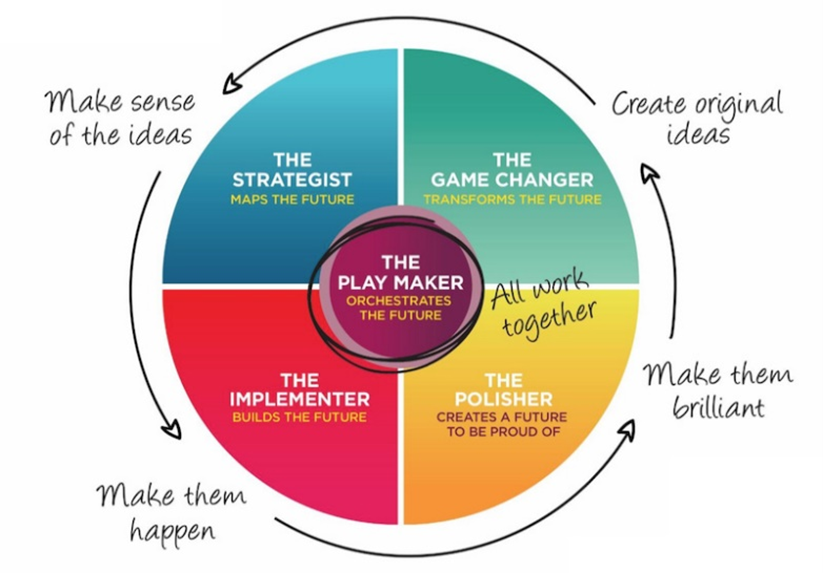
Our tools help institutions embed key learning insights and outcomes of the curriculum with the index profiles of their students, to deliver education that is radical, meaningful, and future skills based.
We believe we have the tool kit to do just that.
Let us help you create young people who are sure about what they have to offer the world that can bring their biggest impact into any job, situation or career that they are in, so that the world that they are busy heading into will be moulded by people who are capable of making decisions about their lives and the environment with confidence in their game changing aspirations.
What’s up with education these days?
What’s up with education these days?

Everyone has been saying it for months now, education has changed, and needed to change. Covid highlighted the gaps and cracks that exist in education, and yet, teachers have never worked harder than they have in the past year. Overnight they had to shift gear and try keep education and learning going, all from behind a screen. No mean feat, and they were visibly exhausted.
Now that schools are slowly getting back to face-to-face learning, what will education look like going forward? Will it simply go back to how it was before, or have the changes set education on a new course?
Obviously the goal of every education institution remains the same, and that is to get the best out of every student – academically, socially, emotionally. But what does that mean?
Ultimately, education facilities want their learners to develop academic independence, emotional and social maturity, and eventual self-regulation and accountability. These are life skills all adults should master to be contributing members of society.
These are the skills that they need to take with them into their futures.
While these are the goals, the reality is that not all learners achieve this, and not all learners are successful. Some people are built for the school environment, and others just aren’t. Some are effective and find school easy, while others struggle to engage and perform consistently. So what do we do?
How do we make school a place that sets learners up to succeed?
Teachers work hard, but sometimes the fit just doesn’t work. What if we could find a way to align learning styles with teaching styles. A way that sets teachers up to succeed by engaging alllearners. A way that sets learners up to succeed because they can’t help but be engaged?
Imagine how the world of education could shift, how learners could be more successful. Imagine what that would mean for their self-esteem and future success.
Think about what it would be like to start off from an early age, knowing what energises you and where you can make your biggest impact. Think about what it means for educators to know how to engage all learners.
The world needs conscious leaders, people who know that no matter how small they are, their impact can be significant. And even more than that, people who know how to harness that energy and use it to make their most meaningful and greatest impact.
The first eighteen years of a person’s life is crucially formative. Brain development during this time is the essential coxswain that navigates future behaviour. Bandura argued way back that there is no better way to start believing in one’s ability to succeed, than to set a goal, persist through challenges along the way to that goal, and enjoy the satisfying results.
So how can we change education to help with self-efficacy which affects every area of a human’s existence.
What if we know how to influence our own beliefs regarding our own ability to impact situations? This would strongly influence both the power a person actually has to face challenges competently, and the choices a person is most likely to make for their future. Even our default way of existing can actually be changed by focusing on actions that can change our brain chemistry.
Our brains are wired by the physical and emotional environment. Some experiences strengthen the connections between neurons, and others weaken (prune) them in a ‘use it or lose it’ strategy.
If we relate that to education, no matter what the challenge may be, ‘something’ can be done to influence the ultimate outcome. If a person believes that their actions impact their experience and the environment, they are more prone to an optimistic view. They will no longer feel like a victim of circumstance.
Now what if we add to that the notion that our brains predict and prepare our actions based on past experiences. It is not possible to change your past, but you can, with effort, change the way your brain will predict and prepare in future. If you think about tying shoelaces… or learning to drive a car… it required serious concentration and effort in the beginning, but once you mastered it, it required no thought because it became an automatic action. This is because your brain has geared itself to make predictions that cause certain actions.
Back to education again. Learning takes place in a social context. It happens through beliefs and our social environment.
What if we could create a social environment that enhances learning. An attitude of creativity and innovation that acknowledges, even sanctions, failing repeatedly, but having the tenacity to keep trying. In one of her talks, Carol Dweck mentions a school system where there are no fail marks, only “not yet”.
The psychological implications of ‘you’re almost there’ vs ‘you have failed’ are so significant that it means that our social reality can become the superpower that enables us to chart our own paths and successes.
We are aligning learning and teaching styles and changing education through this progressive system. An environment (social reality) where we create engagement, as well as encourage belief in the value of motivation to influence any outcome. This attitude will enable learners to overcome failures, or ‘not yets’, with resilience and optimism. We are creating energised environments that best facilitate engagement through deliberate actions. We are changing the game.
If we extend this to beyond education, consider the implications for the future. A generation, and future generations, that can effect changes to some of the most challenging world issues that exist, simply because from young, they have been engaged, they know their impact, and they acknowledge that they have more control over their own lives.
“Human potential is the only limitless resource we have in this world” (Fiornina), it is time to create environments that foster that.

Conscious Connections – Shaping Future Leaders
first published on www.nataleeholmes.comARE MILLENNIALS THE POSTER BORE OUT GENERATION?
ARE MILLENNIALS THE POSTER BORE OUT GENERATION?

Last week I had the opportunity to talk on the radio about a relatively unknown mental health issue called Bore Out. Most of us are familiar with Burn Out, but not many of us have heard of Bore Out.
Bore Out is the equally stressful cousin of burn out in that the symptoms are very similar. People experience exhaustion, listlessness, dissatisfaction at work, anxiety and feel down or depressed. The difference between Burn Out and Bore Out is that burn out leaves people physically exhausted, while Bore Out leaves them psychologically exhausted. People with Bore Out can keep going but they just don’t have the motivation to.
The pandemic has of course thrown an additional spanner in the works. Well, let’s face it, the pandemic was like a hailstorm of spanners in many works, but in a lot of cases, having to work from home caused chronic boredom because working in the same physical environment becomes tiresome. When working from home, our physical environment never changes – work becomes home and home becomes work, and that can be tedious for a lot of people. There are those people who have loved it, but for most people, is has been very difficult.
Enter Gen Y(millennials). The typical characteristics of this generation, young people in their 20s to late 30s, means they value:
- meaningful motivation
- relationships and social interactions with people – real, live, in person people – in the workplace
- technology and have an intuitive knowledge for it
- change and disruption for development
- a passion for learning
- free-thinking and creativity
You can imagine what life during the pandemic has been like for them.
IMPORTANT VALUES EFFECTS OF LOCKDOWN ON VALUES MEANINGFUL MOTIVATION Self-motivation required – easily become demotivated RELATIONSHIPS AND SOCIAL INTERACTIONS Isolated – leads to depression and loneliness; no socialising; no sports LOVE FOR TECHNOLOGY Technology was a godsend for keeping in touch with others, but it has led to addiction and fatigue. People are frustrated by not being able to have physical interactions. They are bored with online interactions. NEED FOR CHANGE No travel to work; no dynamic office environment; no different faces to see daily; no change of scenery PASSION FOR LEARNING If you’re feeling demotivated, then you lose the urge to learn. At the beginning of lockdown people were very keen to learn new things, but that has dwindled due to apathy and being disheartened. While technology is their thing, online learning/ meetings have become tedious and less engaging. FREE THINKING AND CREATIVITY It is hard to be creative when you feel like there is no purpose, and without other people around to bounce creativity off. Is Bore Out something Millennials are more susceptible to, or is it just a part of their culture?
I do believe that millennials are more susceptible to bore out. But whether this is in fact a mental health issue, or simply because of how they function, is something worth debating. The way they function at work is different in a lot of ways to how older generations function. Previous generations worked for a salary and didn’t care much about their purpose. They were more focused on job satisfaction than development. The hierarchical system at work was more pronounced – they had a boss and not a mentor. And they separated their job from their life.
Millennials not so much.
From a psychological point of view, Bore Out causes boredom, despondency, and the ongoing frustrations people experience gradually lead them into a vicious cycle. They progressively lose the will to work, as well as to function in their personal lives.
There is a general loss of self-esteem which is exacerbated by the constant anxiety of being “found out”. No one wants any colleagues, never mind managers or supervisors, to discover that they are bored. This anxiety leads to more stress that intensifies and causes more paralysis at work, and more dissatisfaction. The loss of self-esteem comes from continually feeling like their job is meaningless, and they have no purpose.
For this Y generation in particular, it is the absence of meaning that causes more issues than the presence of stress.
But does this mean they are more susceptible to it? Or that is it a natural symptom of their way of being?
There is a huge amount of frustration from being blocked – to be what they want to be and do what they want to do, which are the things that would give them purpose. The real problem is that while they may be hating their situation, there is a fear about asking for more challenging work, or even different work. I believe this is why this generation is more susceptible, because they are less likely to speak up.
As people age and mature, they get more comfortable with difficult conversations, and grow in confidence to be able to ask for what they want or need. Older generations generally have the self-assurance to be able to speak to a manager or supervisor and explain what they are going through, without fear of being replaced or fired.
Millennials are not quite there yet.
The solution to Bore Out lies in self-awareness, and having the confidence to make changes to your life to make you feel more fulfilled. This may be why millennials are the most likely generation to job hop, and why they have a reputation for being least engaged in the workplace. They tend to be less passionate about their jobs and invest less energy in their work. This may mean that Bore Out, for this generation, is a vicious cycle. They will keep being bored, and job hopping or being discontent, until they find a job that they deem to be meaningful and makes them feel worthwhile.
The obvious upside to this though, is that millennials will change the world through disruption, more than any other generation so far. They don’t just work for a salary – they work for a purpose. And they will be ‘bored out’ of their minds and dissatisfied unless they can find that. Which could mean positive things for a world that is in desperate need of disruption and change.

CLICK HERE to sign up for our FREE webinar on The Antidote to Bore Out
12 Aug, 12pm – 1pm


Shaping Future Leaders